Readers, Welcome to my blog (formerly Birds, Blooms, Books, etc). I'm entering a new decade taking on the challenge of moving from Maryland after living there 46 years and learning about my new home here in New England in the Live Free or Die state - New Hampshire. Join me as a write this new chapter of my life.
We left home here in New Hampshire on June 25th and returned on July 3rd - one day earlier than planned.
Entry point to Canada
Our B & B with our three windows on 2nd floor.
Our first stop was Quebec City where we stayed in the old city at the B & B Quebec. It was a great locations for seeing this part of the city. But our accommodations were quirky - the spacious room was the library filled with books. The bathroom had a claw foot tub with shower overhead. It was not easy to step into or out of and heaven forbid if you lost your balance while standing there because all you had to grab was the shower curtain! I took a bath the second night and even then it was not easy to get out of.
A disappointment with the B & B was the breakfast. This was the most expensive spot we stayed in so we were expecting rather a nice breakfast. Well, it was an easy prep for the staff person but not very satisfying for us. There was a plate with sliced cheese and sliced ham. A basket of croissants. A hard boiled egg we had to peel. Butter and jelly. Coffee and tea. We were definitely hungry at lunch time which we started looking for before noontime.
We did enjoy talking with the young woman staffing the place. She was from Italy and spoke English fairly well. She said her French was much better and she knew some Spanish too. She was hoping to get her permanent residency and become a citizen of Canada one day.
Old Quebec City is a charming spot and full of tourists! We did not move the car from the 25th arrival until our departure on the 27th.
I did share a postcard [here] of the Snowbird flight group that surprised us though I'm sure residents knew of their plan to put on a brief show over the St. Lawrence on the evening of the 25th. We had an excellent dinner at an Italian restaurant that first night.
On the 26th we did more exploring of the even older part of Quebec. We rode the funicular back up to the promenade and then descended into the archaeology exhibit under the promenade. Lunch was good - especially since we were hungry but dinner at a fondu restaurant was mediocre.
Here is our walk down to the oldest part of Quebec which is the level of the river. There are lots of statues to catch your eye.
Once down at river level there are excavations happening.
Murals
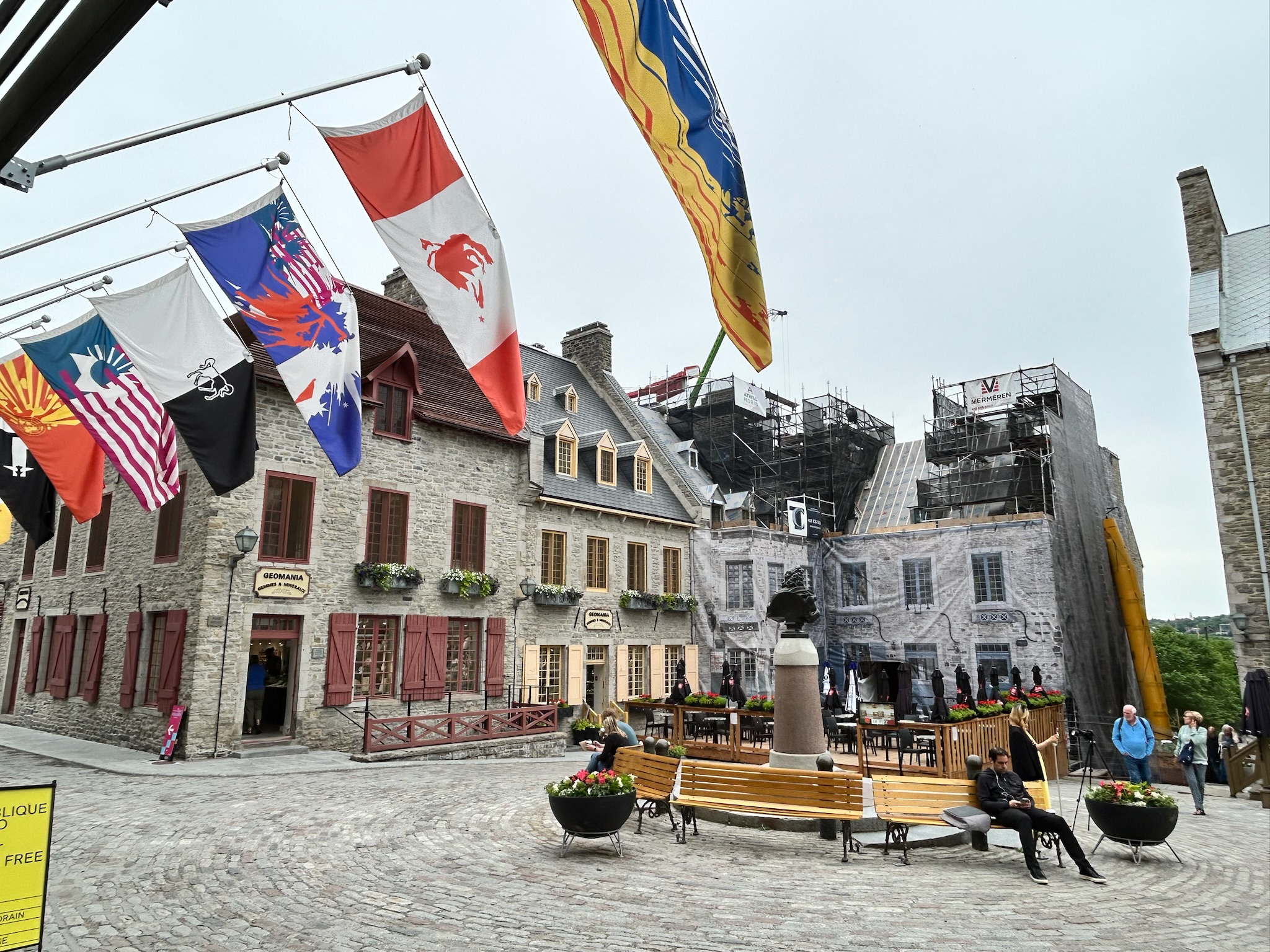
Restored buildings.
A marvelous square with lots of tour guides.
A view of Le Chateau Frontenac above us.
An old fort restored.
Then to the funicular.
Ride the funicular up with us.
One of the park staff of the Archaeology Museum took pity on Dan's French and our inability to download the app to hear the descriptions and gave us a mini tour at the start of this exhibit.
This was the ice house for the chateau which housed the governors of Quebec in colonial times.
I enjoyed the exhibit but took few photos. We did learn that most of the recovered artifacts came from the privies because jewelry would drop in and broken dishes would be thrown in!
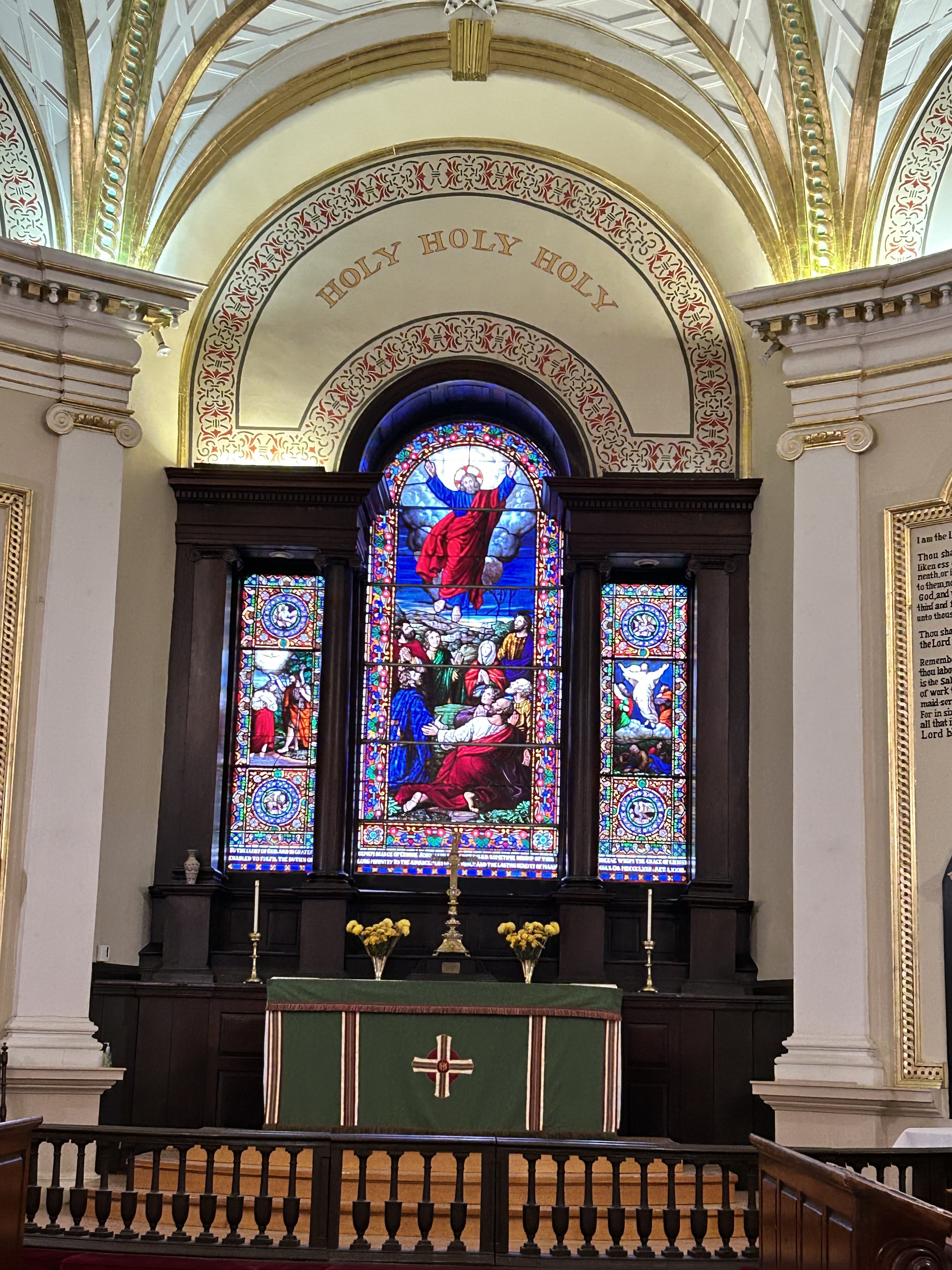
Before our terrible fondu dinner we attended the evening service at the Anglican Church. Counting the three from the church there were less than 10 in attendance. We wanted to hear the organ played.
But a smaller older organ was played instead.
Here is a recording;
The service was all spoken except for the prelude and postlude. Once it was over we asked the organist if we could hear the larger organ and he played a very short piece.
After the same breakfast on the 27th we departed Quebec City traveling east on the south side of the St. Lawrence River with our destination Ste. Flavie on the Gaspe Peninsula.
Donald Trump has already gone a long way toward wrecking American democracy. In five months, he has thrown our economy into a state of uncertainty, our foreign policy into an “America First” confusion about war or peace with Iran, and our national image into one of bleak selfishness.
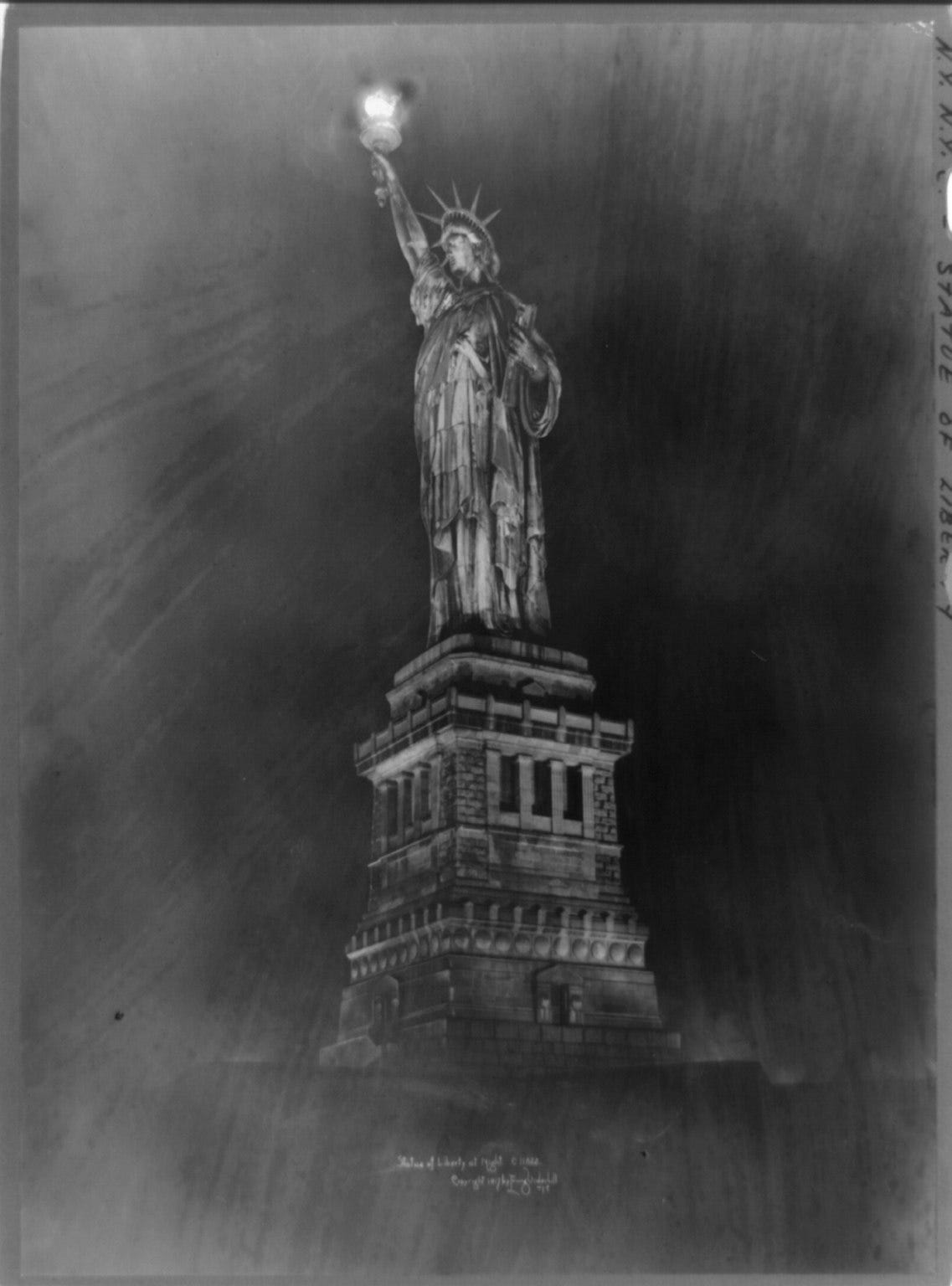
The United States no longer glistens as a universal symbol of freedom and opportunity. No longer does the Statue of Liberty reflect Emma Lazarus’ words of welcome for “Your tired, your poor, your huddled masses, yearning to breathe free.” No longer does this “promised land” burn with the dreams and hopes that my father, more than a hundred years ago, used to call the “goldene medine,” Yiddish for the “golden paradise.”
The president’s image of a “goldene medine” is very different. If you are among the “huddled masses,” yearning for a better life in America, Trump’s message resonates with icy discouragement: You are not one of us! On your way! But if you are wealthy, Trump has a deal for you. Buy a “gold card” for a mere $5 million, he recommends, and you’re assured citizenship. The Statue of Liberty’s purse is open for both your business and your allegiance.
For this rather startling change in national image and attitude, more than any other, I cannot forgive this New York real estate magnate, who has now become our president twice. And the reason I can’t forgive him lies in my father’s journey to an America of old.
By Irving Underhill - Library of Congress Catalog
Fleeing tsarist oppression in May 1914, a month before the outbreak of World War I, my father was a poor teenage tailor from Zyrardov (a textile town in central Poland). Initially, he headed for London to rendezvous with an older brother. But in Bremen, Germany, he mistakenly boarded a boat not to England but to Galveston, Texas, home of an interesting immigration effort called the Galveston Experiment. Arriving alone and penniless, with no relatives or friends, speaking not a word of English, sixteen years of age, with no one to greet him but a local official, Max Kalb still felt he had reached a heaven on Earth. He called it the “goldene medine.”
Not just for tens of thousands of Jews but also for many, many others from Eastern Europe, Germany, Italy, Ireland, and elsewhere, America was then seen as a land of promise, offered to everyone from everywhere. It was regarded as a haven for economic opportunity, religious freedom, and political liberty. For those—like young Max—whose dreams leapfrogged the restrictive borders of rural Zyrardov, America was a dream-come-true; an open door for his energy and imagination.
From his arrival in Galveston to his death in New York 48 years later, America rarely disappointed him. It was always a place, he often told me, where “if you work really hard, and if you do what is right, you’ll be OK. You’ll make it.” He never did make it in terms of riches, far from it, but he lived with pride and dignity, a free man in a country he loved. As such, my father lived the American dream, and he would have never imagined that a president would be the one to demolish that dream; that idea. Nor would I.
But America in 1914 was different. It was an extraordinary place, though one perched on the edge of a transformational war. The Galveston Experiment, among its promises, was hatched in 1907 by wealthy New York businessmen and implemented in Europe by helpful intermediaries who organized the escape and transport of thousands of Eastern European Jews from their confining shtetles to open communities along the Mississippi. My father was caught up in this adventure—not by design but by happenstance. He had simply boarded the wrong boat.
Young Max met a very helpful milkman (the only Yiddish-speaking milkman in all of Texas, my father would often joke), who suggested he leave Galveston and go to St. Louis, where he would find a larger Jewish community and where he could begin to ply his craft as a tailor. For a few months, he worked in a factory producing women’s clothing, but soon left for Rock Island, Illinois, again at the suggestion of a friend. There, he met another tailor, Harry, and together they moved to Chicago. They worked hard, earning enough to dream the impossible dream, a train trip to bustling New York, where, on my father’s first night in town, walking along Delancey Street, crowded with many other Jewish immigrants, he met a lovely young woman from Kyiv, named Bella. They fell in love and a year later married.
By 1930, when I arrived on the scene, the Great Depression was beginning to overwhelm the marketplace. Max and Bella, parents of another son, Bernard, and a daughter, Estelle, moved from an apartment on East 4th Street in lower Manhattan to Southern Boulevard in the Bronx. My father brought his tailoring skills to the Garment Center in mid-Manhattan. Soon, imagining he was an entrepreneur (which he never proved to be), he bought a hat store in Harlem, a very modest enterprise that quickly collapsed in the Depression. Facing economic hardships, he returned to the Garment Center, where, if lucky, he would be able to find a day job, rarely one that lasted for a week. Times were tough, but Max never abandoned hope for better times, nor for the promise he always saw in his America.
I tried, in my way, to help him. In those days, an empty milk bottle, if returned to the grocer, was worth a penny. Five pennies added up to the nickel my father needed for his train ride from the Bronx to the Garment Center. Often, I’d get up at five in the morning to look through garbage pails for five milk bottles. If I found them, my father had his nickel and the possibility of a job that day. At the time, it never occurred to me how he would get home if he didn’t find a job. But, somehow, he always did.
During World War II, while my brother went off to war in the Aleutian Islands and my sister’s husband served his time on an air base in Kansas, my father had no trouble finding work as a tailor. Soon after the war, his entrepreneurial instinct again aroused, he bought a small cleaning store in Washington Heights, which my mother managed during the day while he continued working in downtown Manhattan, returning at the end of the day to do whatever tailoring jobs might have walked through the door in his absence. It seemed to me he never stopped working, slowly accumulating the capital he needed to buy a private home, then later a car.
I often think about my father’s America. Can it ever again be restored? I know what his response would be. With a smile, he would say, ‘Of course! Trump is only one big bump on a long road.’ Though once I shared his optimism, I am no longer certain. Maybe our hopes ought now to rest with our grandchildren. For, if there is to be a restoration, it will surely take time; lots of it.
Marvin Kalb, Murrow professor emeritus at Harvard, former network correspondent, author of the recently published, “A DIFFERENT RUSSIA: Khrushchev and Kennedy on a Collision Course.”